You already have more say in this than you think.
Conservation gets framed as something distant. Someone else's job, in someone else's country, funded by someone with more money than you. It is a convincing story and it is mostly wrong.
Almost everything currently pushing wild animals toward the edge runs through completely ordinary things. A shopping list. A drain. A lawn. A vote nobody showed up for. These systems do damage at scale because millions of us feed them a little at a time without ever being asked to think about it. Which is the whole reason the reverse works too. Below are the places in a normal life where you actually have leverage. No guilt, no doom, no asking you to move to a rainforest. Just the parts that are genuinely yours.
If you find an animal
The most common mistake is helping an animal that never needed help.
Every spring, wildlife rehabilitators receive thousands of perfectly healthy young animals brought in by kind people who assumed they were abandoned. Most were not. A fledgling bird hopping around on the ground with stubby wings is doing exactly what it is supposed to be doing, and its parents are almost certainly nearby watching you. A deer fawn lying alone and motionless for hours is not lost, it has been deliberately parked there while its mother feeds, because a fawn with no scent and no movement is safer alone than beside her. Rabbits visit the nest twice a day, at dawn and dusk, and ignore it the rest of the time.
Picking those animals up usually makes their lives significantly worse. So the first question is never how do I help, it is does this animal actually need help.
Signs an animal genuinely does need help
- It is bleeding, has an obvious wound, or a wing or limb hanging wrongly
- It has been in a cat or dog's mouth, even with no visible injury at all
- It is cold, weak, unresponsive, or covered in insects
- It is a featherless or downy baby bird on the ground, rather than a feathered one
- There is a confirmed dead parent nearby
- It is in immediate danger where it sits, on a road or in a pool
What to do
Keep it quiet, dark, warm, and contained. A cardboard box with air holes and a soft cloth is better than anything else you have, because darkness genuinely calms a wild animal in shock. Put it somewhere silent, away from people and pets. Then call a licensed wildlife rehabilitator and let them tell you what happens next.
That is the whole procedure. The instinct to do more is the thing to resist.
Never do these
- Never feed it, and never give it water or milk. This is the one that kills animals. The wrong food, or food given to something cold or dehydrated, is very often fatal, and cow's milk is fatal to nearly every mammal that is not a cow. Rehabilitators would rather receive a hungry animal than a fed one.
- Never try to raise it yourself. In most places it is illegal without a permit, and even where it is not, wildlife raised by people usually cannot be released. An animal that is not afraid of humans does not survive long outside.
- Never handle a bat, raccoon, skunk, fox, or coyote. These are rabies vector species. Do not touch them with bare hands under any circumstances, and if contact happens, call your health authority the same day.
- Never grab a bird of prey, heron, or anything with a serious beak or talons. Call someone. That is not being squeamish, that is avoiding a hospital visit.
- Never assume a cat-caught animal is fine. Cat saliva carries bacteria that will kill a small animal within days even when there is no visible wound. It needs antibiotics from a rehabilitator, always, no exceptions.
Two situations worth knowing in advance
A bird has hit a window. It is usually stunned rather than injured. Put it in a ventilated box somewhere dark and quiet for an hour or two, then take the box outside and open it. Most fly off. If it has not recovered in a couple of hours, it needs a rehabilitator.
A turtle is crossing a road. Move it in the direction it was already heading, never back the way it came, or it will simply try again. Never relocate it somewhere you think is nicer. It knows where it is going.
Finding a rehabilitator
Search for your state or province plus "wildlife rehabilitator." Animal control, humane societies, and most veterinary clinics keep a list and will point you to the right person. It is worth finding your local one now, while nothing is wrong, and putting the number in your phone. The moment you actually need it is not the moment you want to be searching. A few starting points that work anywhere:
Who to call, fast
- Animal Help Now maps the nearest wildlife rehabilitator and emergency vet in the US from wherever you are standing.
- Search "wildlife rehabilitator near me" is the fastest route to a licensed rehabber anywhere else.
- Your local humane society or animal control keeps a list and will hand you the right number.
- Any nearby veterinary clinic will stabilize a hurt wild animal or tell you who can, usually at no charge to you.
Myth worth killing
Touching a baby bird does not make its parents reject it. Birds have a poor sense of smell and will not abandon their young over human scent. If a nestling has fallen and you can see the nest, you can put it back. That myth has cost an enormous number of birds their parents.
Start at home
The nearest wildlife habitat is the ground you are standing on.
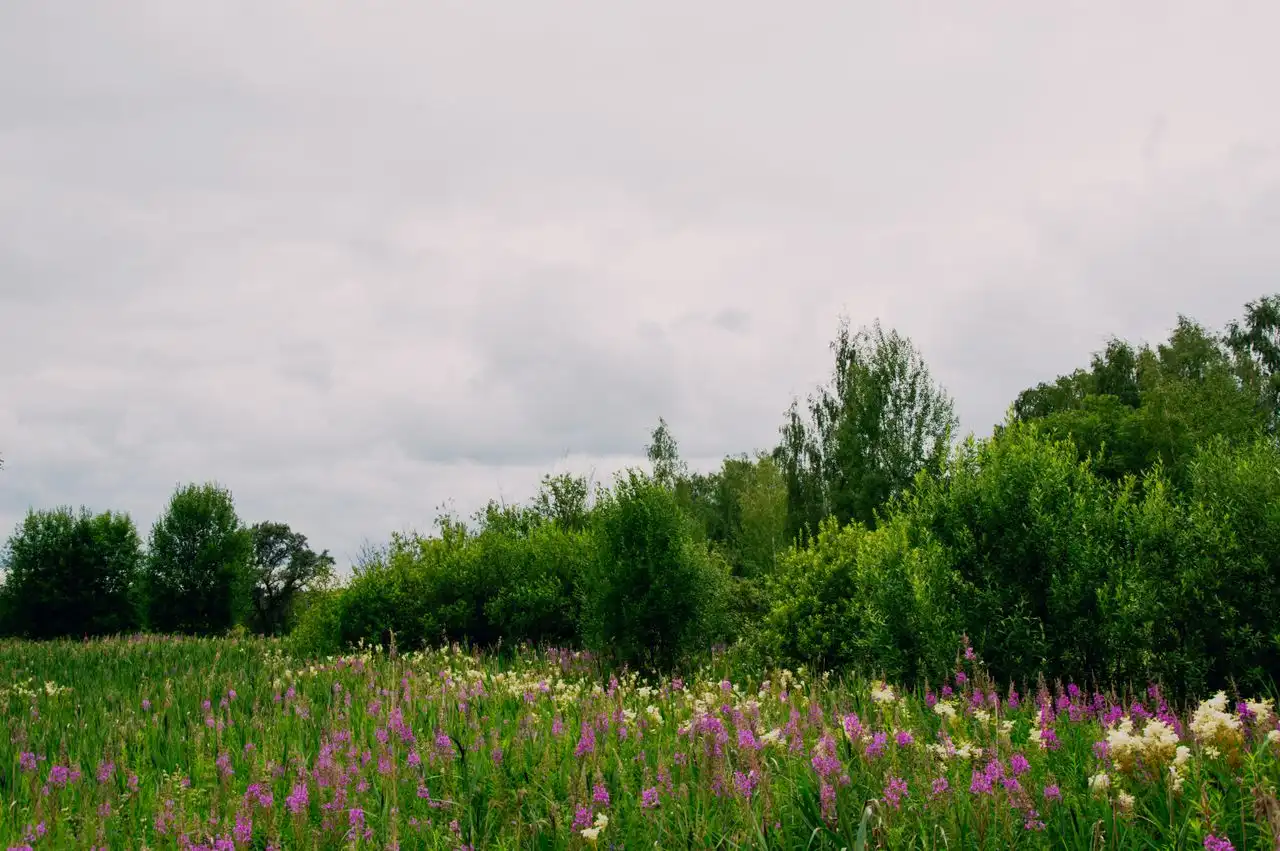
We think of habitat as somewhere you drive to. In practice it is verges, alleys, hedges, drainage ditches, and the strip of dirt behind a parking lot. Small habitat gets destroyed first precisely because it never looks like it counts, and it counts enormously. It is where things nest, shelter, hunt, and cross between the bigger green spaces that are too far apart to reach in one go.
The genuinely good news is that this works in reverse and it works fast. Plant things that belong where you live, and local insects show up, because they evolved alongside those plants and often cannot use anything else. Insects show up and birds follow. You are not rebuilding an ecosystem from scratch, you are handing back a piece someone can immediately use. A balcony counts. A single planter counts.
Two other things worth knowing, because they cause enormous harm and both have free fixes. Outdoor cats kill birds and small reptiles in staggering numbers, more than almost any other direct human-linked cause. And birds cannot see glass, so they fly into windows at speed, hundreds of millions of times a year.
Do this today
- Plant native. Find out what actually grew where you live before anyone landscaped it, and start there.
- Keep cats indoors, or take them out supervised. This is the highest-impact free thing on this entire page.
- Make your windows visible. Decals, cords, screens, or a pattern on the outside of the glass. Anything that breaks up the reflection.
- Point outdoor lights down and turn them off overnight. Light pulls migrating birds and nocturnal insects badly off course.
- Leave one corner messy. Leaf litter, a log, an unmowed patch. Tidy is hostile to nearly everything small.
- Skip the autumn cleanup. Most of what overwinters in a yard is asleep inside exactly what gets blown away.
- Put out clean water in dry months and actually change it.
What ends up in your cart
A forest can come down because of an ingredient list that nobody reads.
Palm oil is in roughly half the packaged products on a supermarket shelf. Bread, shampoo, chocolate, noodles, detergent, makeup. It is not villainous by nature, and boycotting it outright often makes things worse, because the replacement crops need more land for the same yield, not less. The real problem is the unchecked version, where old growth forest is cleared and carbon rich peat soil is burned to make room for a monoculture that almost nothing else can live in.
The same split runs through most of what you buy. Wood and paper come from a managed forest or a stolen one. Seafood comes from a fishery that will still exist in twenty years or one that will not. Souvenirs are carved from wood or from something that used to have a heartbeat, and ivory, shell, coral, and animal skin are still traded briskly regardless of what any treaty says. In nearly every case the responsible version exists, sits on the same shelf, and costs about the same.
There is one more purchase worth thinking hard about, which is an animal. Wild-caught exotics are pulled out of shrinking populations, and most die before they ever reach a buyer. Animals bred for unusual colors frequently inherit health and neurological problems along with the color. And an exotic pet released when it becomes inconvenient can introduce disease into an ecosystem with no defense against it. If you cannot honestly commit to an animal for its entire natural life, which for some species is measured in decades, that is a complete and perfectly good answer.
Do this today
- Look for RSPO certified palm oil. Certification is imperfect and worth criticizing, and it still beats unchecked every time.
- Check for the FSC mark on wood, paper, and furniture.
- Use a seafood guide before you order or buy. Most are free and take ten seconds.
- Never buy ivory, coral, shell, animal skin, or traditional medicine containing animal parts. Not as a souvenir, not as a gift, not because it was already made.
- Buy less and repair first. The most sustainable thing you own is the one you did not replace.
- If you get a pet, never wild-caught, never released. Adopt before you buy.
What goes down the drain
Nothing you pour away actually goes away.
This is the quietest section here and possibly the most important. A storm drain is not a treatment plant. In most places it is a pipe that empties into a creek, and whatever went into it is in that creek within the hour. Motor oil, paint, solvents, lawn chemicals, soap, and litter all take the same short trip.
Poison is worse still, because it does not stay in the animal that eats it.Rodenticide is the clearest example. A poisoned rat does not die immediately. It gets slow, which makes it easy to catch, which means it gets eaten by an owl, a hawk, a fox, or anything else that hunts rodents. The poison moves up, concentrates as it goes, and kills the predator you actually wanted keeping the rodents down. It is one of the few problems in conservation that is both entirely accidental and entirely avoidable.
Amphibians face the mirror image of this. They breathe through their skin, so anything dissolved in the water goes straight into the body with no filter in between. Household chemicals that seem harmless in a sink are not harmless in a pond.
Do this today
- Stop using rodenticide. Use snap traps and exclusion instead. Seal the entry points and the problem stops recurring anyway.
- Cut lawn and garden pesticides, or switch to targeted, non-persistent options used sparingly.
- Never pour oil, paint, solvents, or cleaners down a drain or onto the ground. Take them to a hazardous waste depot.
- Do not flush unused medication. Most pharmacies will take it back for free.
- Wash synthetic clothing less often, and use a microfibre filter bag if you can. Synthetic fabric sheds plastic into the water every wash.
- Recycle electronics properly rather than binning them. The metals inside are mined out of some of the most biodiverse places on earth.
- Pick up litter near water. It is the least glamorous item on this page and one of the most directly useful.
What's on your plate
Food is the single biggest way most people touch a wild place they will never see.
Agriculture is the leading driver of habitat loss on earth. Not logging, not mining, not cities. Farmland. Which means the most direct line between an ordinary life and a disappearing forest usually runs through a fridge.
This is not an argument that everyone has to go vegan. That framing has made this conversation worse, because it turns a question of margins into a question of identity, and most people quite reasonably opt out. The actual maths is simpler. A meaningful shift in what a lot of people eat some of the time changes how much land has to be cleared. A total change by a small number of people does much less.
Then there is waste, which is the part nobody defends. Roughly a third of the food produced globally is never eaten. That is land cleared, water used, and habitat lost for food that went straight into a bin. Wasting less is the rare conservation action that also saves you money and requires no sacrifice whatsoever.
Do this today
- Waste less, before anything else. Plan meals, freeze what is turning, and learn what the date labels actually mean.
- Shift a few meals a week rather than overhauling everything. Consistency beats intensity.
- Eat what is in season near you when it is easy to.
- Compost what you cannot use.
- Buy loose produce over pre-packaged where you have the choice.
Use your voice
Policy decides how much land stays wild. Policy responds to noise.
Almost every conservation success story on record required someone with authority to make a decision, and almost every one of those decisions happened because enough people made it awkward not to. Protected areas, import restrictions, pollution limits, enforcement budgets. None of that arrived on its own and none of it stays without pressure.
The most overlooked version of this is local. Municipal planning decides what happens to the wetland at the edge of town, the wooded lot behind the shops, and the creek that runs under the road. Those consultations are open to the public and almost nobody attends, which means a very small number of people currently decide them. Turning up puts you in a room with more influence per person than almost anywhere else you could spend an evening.
The room where your local land use gets decided is usually half empty. That is either depressing or extremely useful, depending on what you do about it.
Do this today
- Vote with land use in mind. Local elections shape it far more than national ones do.
- Contact your representative about a specific place or a specific bill. Specific always beats general.
- Show up to a municipal planning or land use consultation. Once. See what it is like.
- Share accurately. Misinformation about wildlife travels faster than the real thing and does real damage.
- Push back gently on myths. Most people who are frightened of a harmless animal have simply never been told otherwise, and one calm conversation genuinely fixes it.
Show up
A surprising amount of real conservation data was collected by people with a phone and a free afternoon.
Researchers cannot be everywhere, and the gaps in population counts, range maps, migration timing, and invasive species reports get filled by ordinary people paying attention on purpose. This is not busywork made up to keep the public feeling involved. It ends up in actual datasets that actual decisions rest on.
Record what you see
Log sightings through platforms like iNaturalist and eBird. A photo of a bird in a parking lot becomes a data point. This is the lowest effort, highest value thing on this entire page.
Give time locally
Wildlife rehabilitation centres, habitat restoration groups, river and shoreline cleanups, invasive species pulls. All of them are short-handed. All of them will take you.
Fund the work
Small recurring donations are worth more to a conservation organization than large one-off ones, because they can be planned around. Give to groups that publish where the money actually goes.
Pick one thing. Genuinely, one. The failure mode with a page like this is not that people do not care. It is that they read twenty action items, feel the entire weight at once, and do nothing, because next to the size of the problem everything felt insufficient. It is not insufficient. One habit you keep beats a week of guilt every single time.
Or do it together
Giving on your own is powerful and a bit lonely. Giving together is neither. A portion of what this community contributes goes directly to conservation organizations doing this work on the ground, and because it arrives from everyone at once it becomes the kind of steady, predictable support that groups can actually build plans around. You do not have to do this part alone either.
See where the contributions go →Resources
If you have found an animal
- Animal Help Now, find the nearest wildlife rehabilitator in the US
- Otherwise, search your state or province plus "wildlife rehabilitator," or call your local animal control or humane society
Find out what lives near you
Shop better
Understand what is happening
Protect what is close to home
Support the work
None of this asks you to be an expert. It asks you to be slightly harder to sell to, slightly harder to fool, and unwilling to look away.
Nearly every threat facing wildlife right now is human in origin, which is bleak for about ten seconds and then quite hopeful, because it means nearly all of it is reversible. Things that were caused can be uncaused. Start with one item on this page. Once it stops feeling like effort, come back and pick another.